Treating austenitic steels with heat strengthens the
final products, i.e. an increase of yield tensile strengths
(YTS) and ultimate tensile strengths (UTS). As seen in
Figure 6, these two characteristics are correlated. In
general, this may allow for more reliability in the tubes
bearing the same pressure.
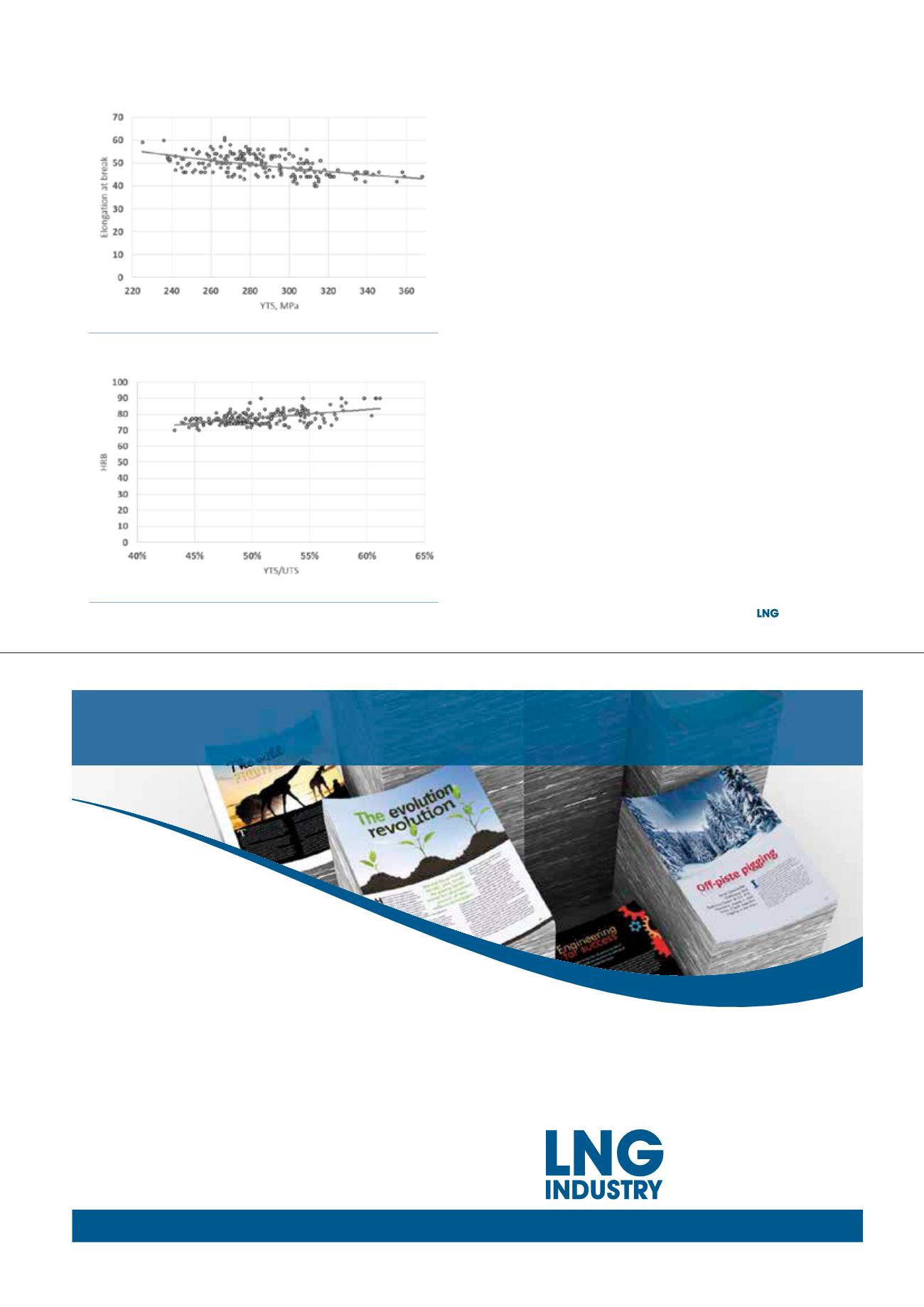
The increase of YTS, however, leads to decreased
plasticity of the metal, evidenced by lower values of
elongation at the break (Figure 7). As a side effect, this
may result in undesired lower formability of the product,
as well as higher sensibility to micro-cracks and impact
loads. In relation to the manufacturing of the tubes, it is
important to consider that higher YTS can lead to large
values of surface robustness as a result of applying higher
loads during straightening after annealing, leading to
higher stresses in contact between the pipe outside
diameter surfaces and rollers (Figure 8). If robustness
becomes too high, there is a risk of corrosion under stress.
Centravis has a proprietary technology that allows for
lower surface robustness and, therefore, the ability to
offer higher YTS, exceeding the minimum standard
requirement by up to 60%.
In order to maximise the value brought to the FLNG
project, the technology of tube and pipe production must
take into account a reasonable balance between all of the
parameters affecting the final product’s functionality. All
of these aspects were carefully addressed during the
execution of the company’s first FLNG order.
We can tailor to your
requirements,
produce 1 - 12 page
formats, print colour or
mono and more
Need a reprint?
+44 (0)1252 718999
Figure 8.
Hardness vs ultimate-to-yield strength ratio.
Figure 7.
Elongation at break vs YTS.


