LNG
NEWS
12
LNG
INDUSTRY
OCTOBER
2016
Europe
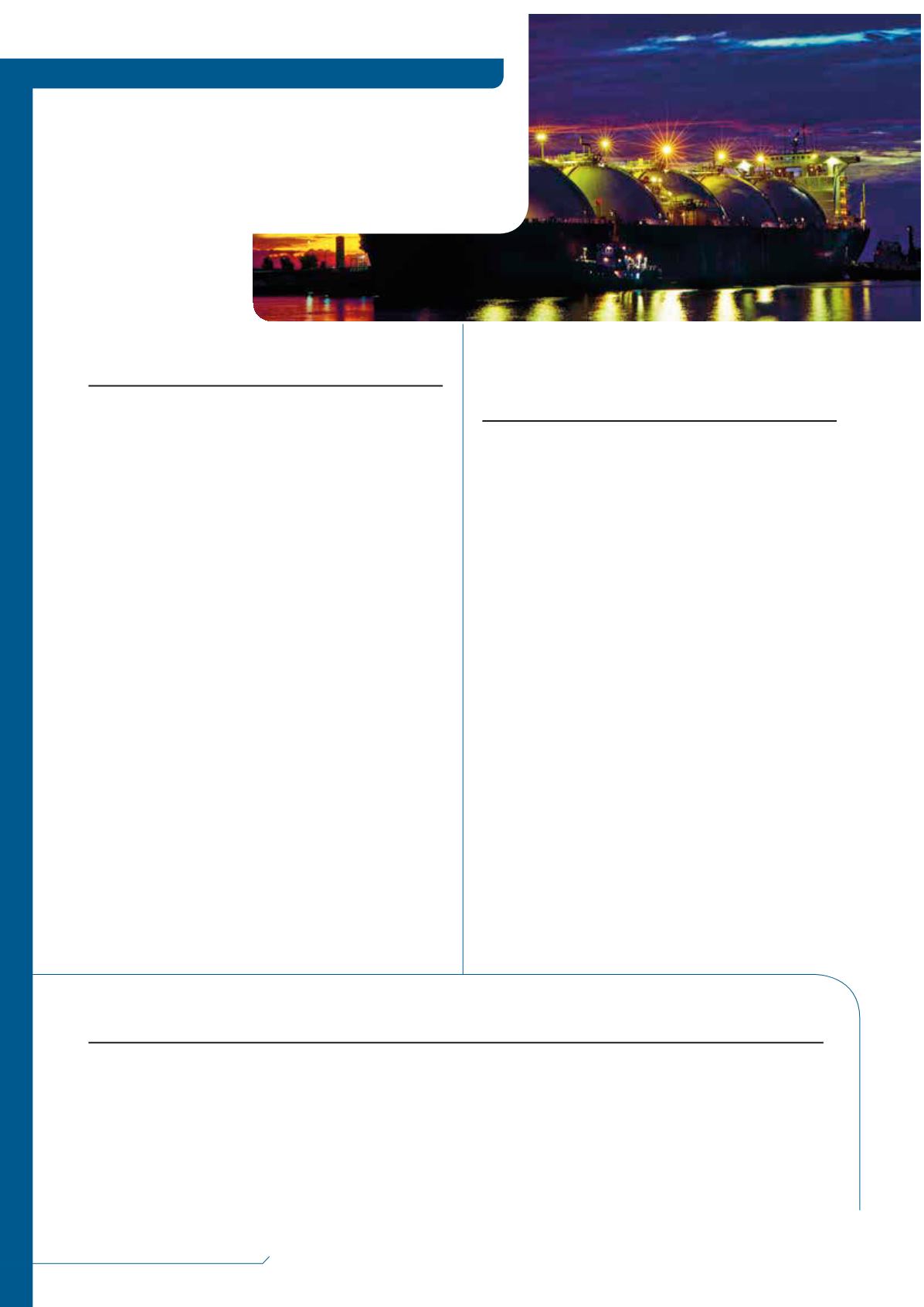
Shell to fuel Carnival Corp.’s LNG-powered cruise
ships
C
arnival Corp. & plc has announced that it has signed a
framework agreement with Shell Western LNG B.V., under
which Shell will supply LNG for Carnival Corp.’s LNG-powered
cruise ships. Initially, Shell will supply fuel for two new
LNG-powered ships belonging to Carnival Corp.’s AIDA Cruises
and Costa Cruises brands.
Under the agreement, the vessels will use Shell’s
infrastructure in cruise ports to refuel. Both ships are expected
to launch in 2019, and will visit popular Northwest European
and Mediterranean ports.
As part of the framework agreement, both parties have the
opportunity to work together on supplying LNG as a marine
fuel to future LNG-powered vessels or additional itineraries.
The overarching agreement allows each of Carnival Corp.’s
brands to negotiate its own LNG supply contracts with Shell as
new LNG-powered cruise ships launch in the coming years.
Both vessels will be built with Carnival’s next generation
‘green cruising’ ship design, will be equipped with dual-fuel
engines, and will be powered by LNG both in port and at sea.
The Senior Vice President of Maritime Affairs for
Carnival Corp., Tom Strang, said: “We are proud to be on
the forefront of advancing LNG as a fuel source for the cruise
industry and creating an entirely new model for powering
next-generation cruise ships. We look forward to a productive
partnership with Shell, which has the experience and shared
commitment to quality, safety and operational efficiency
needed to help us bring this innovative LNG initiative to life
with the first fully LNG-powered ships in the global cruise
industry.”
China
Engie to supply LNG to Beijing Gas Group
E
ngie has announced that it has been awarded a contract
to supply approximately 900 million m
3
of LNG to meet
the downstream requirements of Beijing Gas Group (BGG).
The contract award follows a tender process launched by
BGG to secure its winter gas needs for Beijing, China.
Engie will deliver 10 cargoes of LNG to BGG over the
period November 2016 through February 2017. BGG shall
receive the LNG volumes into the Caofeidian terminal,
in Northern China, where it will be stored, regasified and
transported into Beijing’s gas network. LNG deliveries will
notably involve floating storage in order to manage the
winter peak shaving and flexibility needs of BGG.
Philip Olivier, CEO of Engie Global LNG Business Unit,
said: “This new agreement between Engie and BGG shows
the fruitfulness of the relationship that both companies
have built over the last years. We are confident that our
cooperation will contribute to cover China’s growing energy
needs.”
USA
AGDC and ConocoPhillips sign MoU
T
he State of Alaska, through the Alaska Gasline
Development Corp. (AGDC), and ConocoPhillips Alaska Inc.
have executed a Memorandum of Understanding (MoU)
regarding negotiations to form a joint venture (JV) company.
The JV could facilitate marketing LNG from the Alaska LNG
project to global LNG markets and acquire North Slope gas,
with the goal of bringing LNG buyers and North Slope wellhead
sellers together.
AGDC and ConocoPhillips confirmed that they intend to
pursue the support of the other major North Slope producers in
the formation of the JV.
AGDC said that the MoU forms part of its broader plan to
position the Alaska LNG project for a front end engineering
design (FEED) decision.
The MoU focuses on leveraging the strengths of the parties
to advance the goal of economic commercialisation of the
North Slope natural gas resources. It also anticipates raising
market awareness of the Alaska North Slope gas resource
and the Alaska LNG project. Active sales and negotiation
activities with global buyers could begin once the JV has been
successfully formed.
Once established, the JV is expected to initially focus
on gathering LNG market information in support of the JV’s
pursuit of gas and LNG sales agreements as the project moves
forward.
The JV would also seek to establish terms for a sufficient
and reliable supply of gas to the project, resolving project
gas supply assurance issues. The MoU anticipates that other
producers or third parties could join the JV, make gas available
via wellhead sales, or commit to tolling arrangements with the
Alaska LNG project.


